Showing posts with label flood clean up. Show all posts

Friday, September 25, 2015

September = National Preparedness Month


The most prepared some families and individuals get is 24 hours before a major

weather event, after store shelves have been cleared of batteries, flashlights and other

essential supplies. You may not need a dumpster rental from Bin There Dump That

during a crisis, but you must craft a plan well in advance, and what better time than ~

[drum roll] ~ today!

Communication is imperative during an emergency, so have your ICE (In Case of

Emergency) programmed into every cell phone, including a contact outside your region,

in case communications are down locally. Teach everyone to text or use SMS (Short

Message Service) as it might work when a phone call does not. It is advisable to have a

contact card in every wallet, purse, book bag or backpack in case you are in different

locations and someone needs to make contact for a child or injured adult.

The most common reasons for evacuating your home or business, according to the

Federal Emergency Management Agency (FEMA) are flood and fire. Determine a place

for you and family members to meet in a circumstance where you need to leave your

house, neighborhood or town at a time when you are not together. This can be a corner of

the yard, a certain street corner or a park in a neighboring community. Special

transportation needs must be addressed in advance for:

  • babies and small children
  • elderly folks, especially those with dementia or ambulatory issues
  • tween kids and teenagers
  • special needs people
  • house pets
  • horses and livestock


Your emergency kit can go with you if you leave your home or lose power at

home. Whether you live in a house, apartment, condo, travel trailer or high-rise, everyone

should have an emergency kit in a case with a handle or a backpack with handy items,

such as:

  • flashlights and batteries
  • portable radio and batteries
  • bottled water
  • non-perishable snacks
  • change of clothes for everyone
  • poncho for each person
  • contact cards
  • roll of toilet paper and paper towels
  • basic first aid supplies
  • a whistle 
  • couple toys for children
  • list of conditions and/or medications for each family member
  • three large trash bags (in case you need to carry this through water)
  • things you can toss in at the last minute include prescriptions, cell 
  • phone chargers, dog and cat food


One of the most significant and challenging aspects of dealing with an emergency

or weathering a storm at home is staying calm. Children and elderly people especially are

greatly influenced by the actions and attitudes of adults and even teens around them.

Your behavior, facial expressions, choice of words and tone of voice can make a huge

difference in the response of those close to you during a crisis. Breathe, pray, move

slowly and confidently, sing, speak in a normal tone of voice and talk to your teens in

advance, letting them know you expect them to be strong and get along with everyone

during a rough time.

Gather the family around the kitchen table and pull together your emergency plan

and disaster kit. There will be greater cooperation when everyone has been part of the

plan ~ a plan you hope you never have to use. But if you do, you are well prepared.

Monday, August 17, 2015

Be Safe ~ Be Smart: Flood Prep


The number one natural disaster in the United States is floods, and Florida leads the country with twice as many claims and twice as much money paid out than the second state on the list [Alabama]. While a flood is a temporary condition, it is also a potentially dangerous and expensive experience. 

In the Tampa Bay region, it's not usually swollen rivers overflowing their banks, but heavy rainfall in a short period of time, measured in hours, not days or weeks or the high tides in South Tampa.   The topography is fairly flat, and there are not many appropriate places for rainwater to go once the drain systems are overwhelmed. So, it leaks and pours into inappropriate places, like your house. 

You can't control Mother Nature, but you can be prepared and remain safe during torrential rains and local flooding.   About half of people who die in floods are trying to drive through water.  The Bin There Dump That Dumpster Diva is here to tell you that water is one powerful force.   It creates valleys like the Grand Canyon, can sweep away a car or SUV in a mere two-foot depth, and a person can go down quickly in as little as six inches of rapidly moving water.  

If you live in Aspen, Colorado, you should be prepared for heavy snows and power outages.  If Chicago is your home, its nickname of the Windy City is a clue that mega breezy conditions may occur.  And if you are lucky enough to reside in the Sunshine State of Florida, flooding could be the thorn in your side.  Preparation is key, even if there's nary a cloud in the sky.  

Things to keep on hand year round, plus extras you can gather even one day in advance:
  • flashlights and batteries
  • radio with batteries
  • pet flood emergency plan
  • spare toiletries in a secure bag
  • change of clothes in waterproof container
  • dry foods, snacks and pet food
  • medicine
  • flotation devices (why not?) for every member of the family
  • know how to shut off power and gas to your house
  • fully charged cell phone
  • at least a few gallons of clean water.

All levels of government stay informed and impart information to the public as it becomes available.  Stay tuned in advance to weather alerts and heed both watches and warnings.  Hold a family powwow and go over emergency procedures, plans and supplies.  

Take advantage of free sandbags, like the City of Tampa recently provided, and all other services, including moving to a shelter in advance.  Emergency Medical Services personnel and equipment are stretched to the limit during natural disasters, and people who plan ahead need not be in the statistics of those who need evacuation assistance or among those who perish in the disaster.   Be part of the solution, not the problem. 
  • Stay calm and clear-headed
  • Tune in for local news and information often
  • Do not drive or walk in moving water
  • Evacuate in advance if it looks worse than normal
  • Cut off your own power if water rises
  • Don't touch any downed power lines
  • Refrain from swimming
  • Be smart, sensible and safe
Since hurricanes are a serious source of flooding, many of our resources locally address flooding in hurricane preparedness communication.  Here are a few local resources for flood preparation around our area:

Thursday, August 13, 2015

Tampa Flood Clean Up


Some Rain Must Fall


In his well-known poem "The Rainy Day," Henry Wadsworth Longfellow [1807-1882] concluded:


Into each life some rain must fall,
Some days must be dark and dreary.


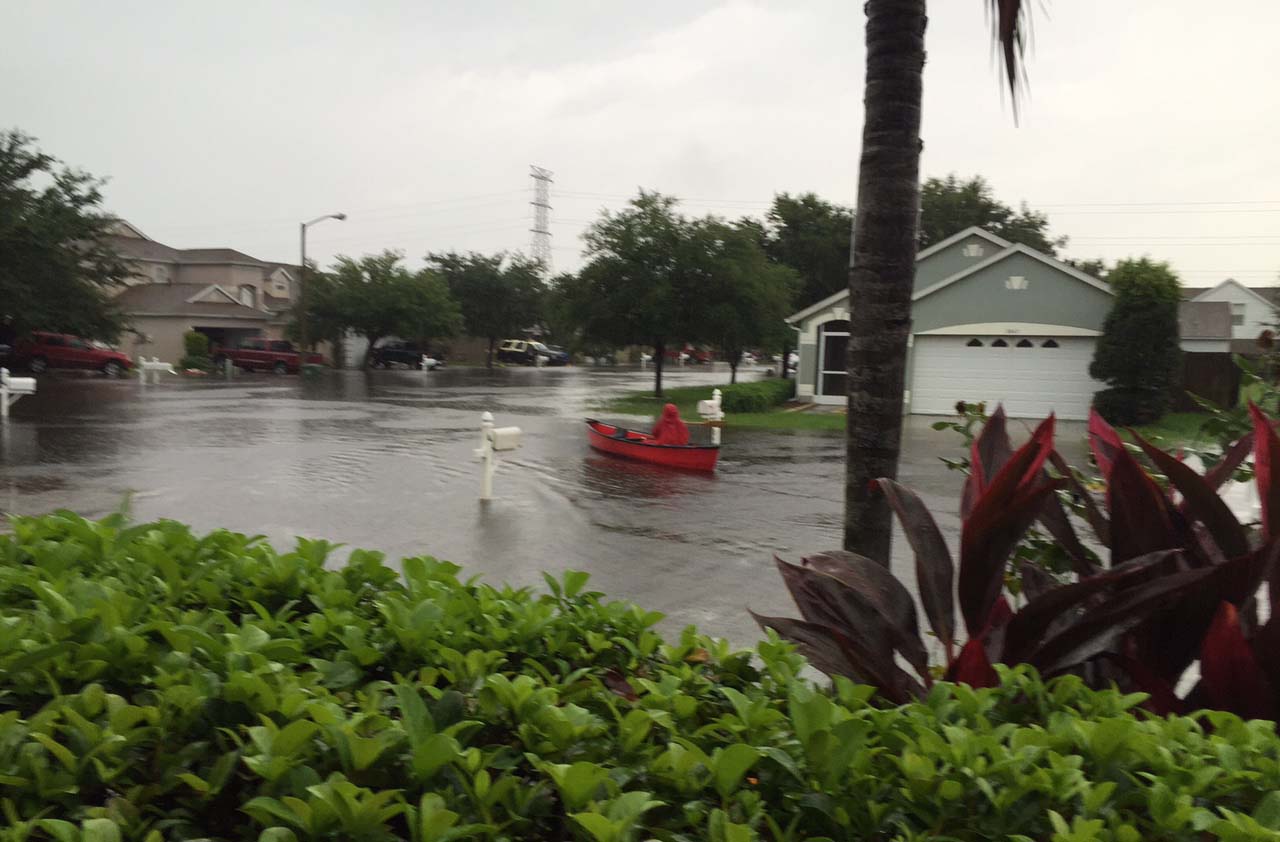
Certainly this could not have been some premonition of recent days in Florida, could it?   The Gulf View Square Mall in Port Richey closed mid-afternoon. Parts of Anclote River Estates were evacuated. Streets and intersections in Tampa were flooded. The Sky Way Bridge closed at times, & Buddy Brew on Kennedy Avenue in Tampa gave away coffee to stranded motorists.


Even the Pony Express, now known as the U.S. Postal Service, was halted from its operating slogan, "the mail must go through," due to flooding.  I thought they never stopped!   This was not a futuristic movie of natural disaster; it is/was real life in the Tampa Bay region as rainfall descended at unprecedented rates in late July and into August.  


Just under six inches of rain in 12 hours was reported in Odessa at one point, while more than seven inches fell in Palm Harbor and close to five and a half in Dunedin!   Imagine heading home via the I-275 southbound exit ramp at Westshore Blvd. to find it flooded at the bottom and gridlock of autos backed up to the highway. Rescue units were out in full force plucking folks from flooded homes and evacuating families from flooded apartment complexes.


Curt Gadson, a federal employee who was stuck on a flooded Palmira Avenue in Palma Ceia, joked about capturing the water and sending it to drought-ridden California. In Palm Harbor, jon boats and Humvees were pressed into service to bring people out of an RV park. Even Pinellas Suncoast Transit Authority got into the action, sending out a couple buses to assist stranded residents. The Sunshine Skyway Bridge boasted winds gusting up to 43 miles per hour, and the Florida Highway Patrol advised everyone to use caution if they had to go that way.


The Anclote River rose close to its highest ever, and rain fell in some places at the rate of three inches per hour. And for a few days and ensuing weeks in this neck of the woods, it's possible that the Sunshine State was fast becoming the Waterlogged State. Most of you probably saw the facebook map where our area was under water in the middle of Florida!


The normal average rainfall for August fell in just the first three days. July ended with 4.7 inches above average rain. The flatness of the land along with our location means that the greater Tampa region often experiences heavy rainstorms and local flooding. Tropical storms and hurricanes bring more damage and floods than the typical, afternoon thunderstorms, but all can damage property and threaten health and well-being.


The City of Tampa has produced a Stormwater Department Flood Protection brochure available by clicking this link here.


But the bottom line is this:

If you have/had water seeping into your living room, master bedroom, kitchen, carport or anywhere, you don't much care about the statistics.  You know there's been wa-a-a-ay above average rain. You're looking at it in places you don't want to see it, possibly damaging your property and stuff. Stick with Bin There Dump That's Dumpster Diva for flood tips, clean-up advice and debris removal dumpster rentals coming next to our blog!